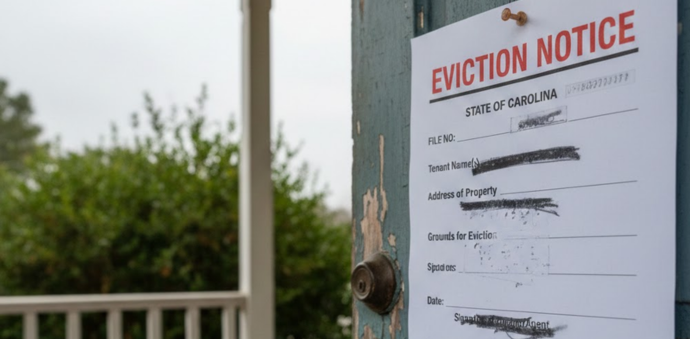
An eviction notice in North Carolina means your landlord is formally warning you to fix a lease issue (like unpaid rent) or leave the property by a specific deadline, typically 10 days for nonpayment. Receiving one starts the legal "summary ejectment" process, but you have the right to respond, pay up if possible, or fight it in court—especially in Charlotte's Mecklenburg County courts.
Legal Process Step-by-Step
North Carolina law (Chapter 42 of the General Statutes) requires landlords to follow strict steps before forcing you out.
- Notice Period: For unpaid rent, landlords must give a 10-Day Demand for Rent (NCGS § 42-3), allowing you to pay or vacate; other violations get a 10-day notice to cure or quit; month-to-month tenancies need 7-30 days depending on lease type.
- Filing Complaint: If you don't comply, the landlord files a "Complaint in Summary Ejectment" in magistrate court (small claims); in Mecklenburg County, this goes to the Charlotte-Mecklenburg Courts, with summons served within 5 days.
- Court Hearing: The hearing is set 7-30 days after summons, usually within days; both sides present evidence before a magistrate; you can defend yourself or get a continuance (up to 5 days).
- Writ of Possession: If the landlord wins, a writ issues after 10 days, giving you 0-5 days to leave before sheriff eviction; total process: 1-3 months.
Tenants get protections like no self-help evictions (e.g., lockouts are illegal).
Immediate Actions
Act fast to protect your rights as a Charlotte tenant.
- Read the notice carefully; check the date, reason, and delivery method (must be proper: mail, post, or in person).
- Pay overdue rent if nonpayment is the issue; get a receipt to stop the process.
- Gather documents: lease, payment records, photos of issues (e.g., repairs needed).
- File an "Answer to Complaint" at the Mecklenburg County Clerk of Court if served a summons, deny claims, and request a hearing.
- Contact Legal Aid of North Carolina (1-866-219-5262) or Charlotte's tenant resources the same day.
Common Defenses
You can challenge eviction if the landlord messed up or you have valid reasons.
- Improper Notice: Notice invalid (wrong period, not delivered right), e.g., no 10-day rent demand served.
- Payment Dispute: Prove you paid or the landlord accepted late rent, using bank statements or receipts.
- Habitability Issues: Unit unlivable (no heat, leaks); use "constructive eviction"; report to Mecklenburg County Code Enforcement first.
- Retaliation: Eviction for complaining about repairs or joining a tenant group is protected under NC law.
- Discrimination: Based on race, disability, etc., file with HUD or NC Human Relations.
Winning defenses can dismiss the case; the magistrate rules on the spot.
Consequences
Losing means sheriff removal, belongings stored (7 days to claim), and an eviction record harming future rentals. Damages or unpaid rent can lead to collections or wage garnishment; staying puts you at risk of double rent liability post-judgment.
Read: How to File a Legal Demand for Compensation Against Your Landlord